November 11 · Remembrance Day
Lest we
forget.
Remembering those who served, those who died, and the families who carry their stories.
Remember. Learn. Share.
Why we remember
Explore Canada’s history of service and remembrance.
Why November 11 matters
Remembrance Day honours the people who served Canada and those who died in service. The date recalls the armistice that ended the fighting of the First World War at 11 a.m. on November 11, 1918.
Many commemorations include two minutes of silence. Veterans Affairs Canada’s ceremony guide explains this tradition and the other elements of a remembrance service.
Read the guide to commemorative services (opens the official website in a new tab)People, service and sacrifice
Remembrance includes people from many backgrounds who have served Canada, at home and around the world. Personal accounts help us learn about their experiences and the effects of service on families and communities.
November 8 is Indigenous Veterans Day. Learn about the contributions of First Nations, Inuit and Métis Veterans through the government’s dedicated resources.
Read people’s stories (opens the official website in a new tab)Learn about Indigenous Veterans (opens the official website in a new tab)The meaning of the poppy
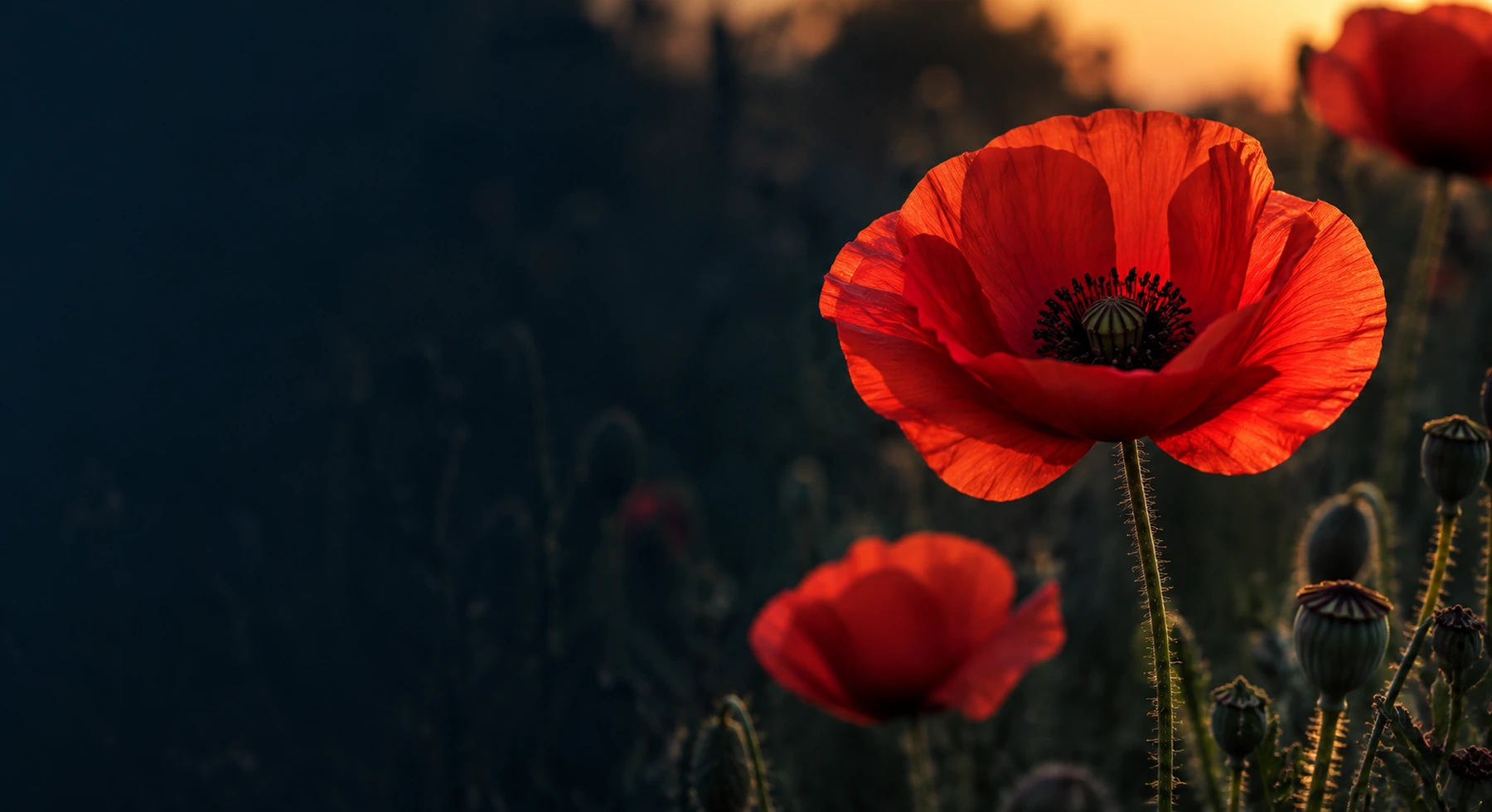
Poppies grew on battlefields during the First World War. John McCrae’s poem, In Flanders Fields, helped connect the flower with remembrance. The poppy was adopted as a remembrance symbol in Canada in 1921.
The flowers on this page are illustrative artwork, not an official Legion emblem.
Explore the history of the poppy (opens the official website in a new tab)veterans.gc.ca
For the next generation
Find learning activities and stories to share with children and young people.
Learn together at every age
Veterans Affairs Canada offers classroom resources for different ages: Take Time To Remember for ages 5–8, Tales of Animals in War for ages 7–11, and Canada Remembers Times for ages 12–18.
Its learning directory includes videos, lesson plans and Veteran interviews. Adults can choose resources suited to a child’s age and the questions they want to explore together.
Find learning materials (opens the official website in a new tab)Discover stories and memorials
The government’s learning resources introduce memorials, Canadian women in uniform, and Indigenous Veterans. They offer ways for young people to connect individual experiences with Canada’s history.
Explore a story together, make space for questions, and continue learning beyond November 11.
Explore learning activities (opens the official website in a new tab)Discover people and stories (opens the official website in a new tab)Take part in remembrance
Veterans Affairs Canada maintains a directory of commemorative events. Use it to find ceremonies and activities, and check the organizer’s current details before attending.
Its guide to commemorative services also helps schools and community groups understand how remembrance ceremonies are organized.
Find commemorative events (opens the official website in a new tab)Explore the ceremony guide (opens the official website in a new tab)All educational information is sourced from Government of Canada websites. Follow the source links in each topic to learn more.
Ways to help
Choose to support a cause through the organization’s official website. Learning, sharing resources and giving your time are meaningful ways to take part, too.
Support Veterans and their families
Royal Canadian Legion · Poppy Fund
Support truth and reconciliation
National Centre for Truth and Reconciliation
Donations are made directly on the organization’s website.
The Golden Bazaar does not collect donations.
Donation information comes from the linked organizations. These links do not imply affiliation or endorsement.