Honouring residential school Survivors, remembering the children who never returned home, and making space to learn about First Nations, Inuit and Métis histories.
Residential schools separated Indigenous children from their families, languages and cultures. Their harmful effects continue across generations.
In 2015, the Truth and Reconciliation Commission released 94 Calls to Action. They address the legacy of residential schools and the work needed to advance reconciliation.
Sources: Canada.ca · Crown-Indigenous Relations
Why September 30 matters
September 30 marks both the National Day for Truth and Reconciliation and Orange Shirt Day. It is a time for remembrance, listening and learning about the continuing effects of residential schools.
Orange Shirt Day began as a community initiative in Williams Lake in 2013. The orange shirt represents losses experienced by children in residential schools and carries the message that every child matters. The national day was established in response to Call to Action 80.
Canada’s residential school system separated Indigenous children from their families and communities, disrupting connections to languages, cultures and identities. A Government of Canada statement describes more than 150,000 First Nations, Inuit and Métis children being forcibly removed through the federal system between 1867 and 1996.
These harms did not end when schools closed. Their effects continue across generations. Learning this history means recognising what happened to children and the continuing experiences of Survivors, families and communities.
The Commission gathered accounts from Survivors and witnesses and documented residential school history. Its 2015 final report included 94 Calls to Action addressing children’s welfare, education, languages, health, justice, commemoration and other areas.
The Calls to Action identify responsibilities across institutions and society. Reconciliation requires sustained work in partnership with First Nations, Inuit and Métis.
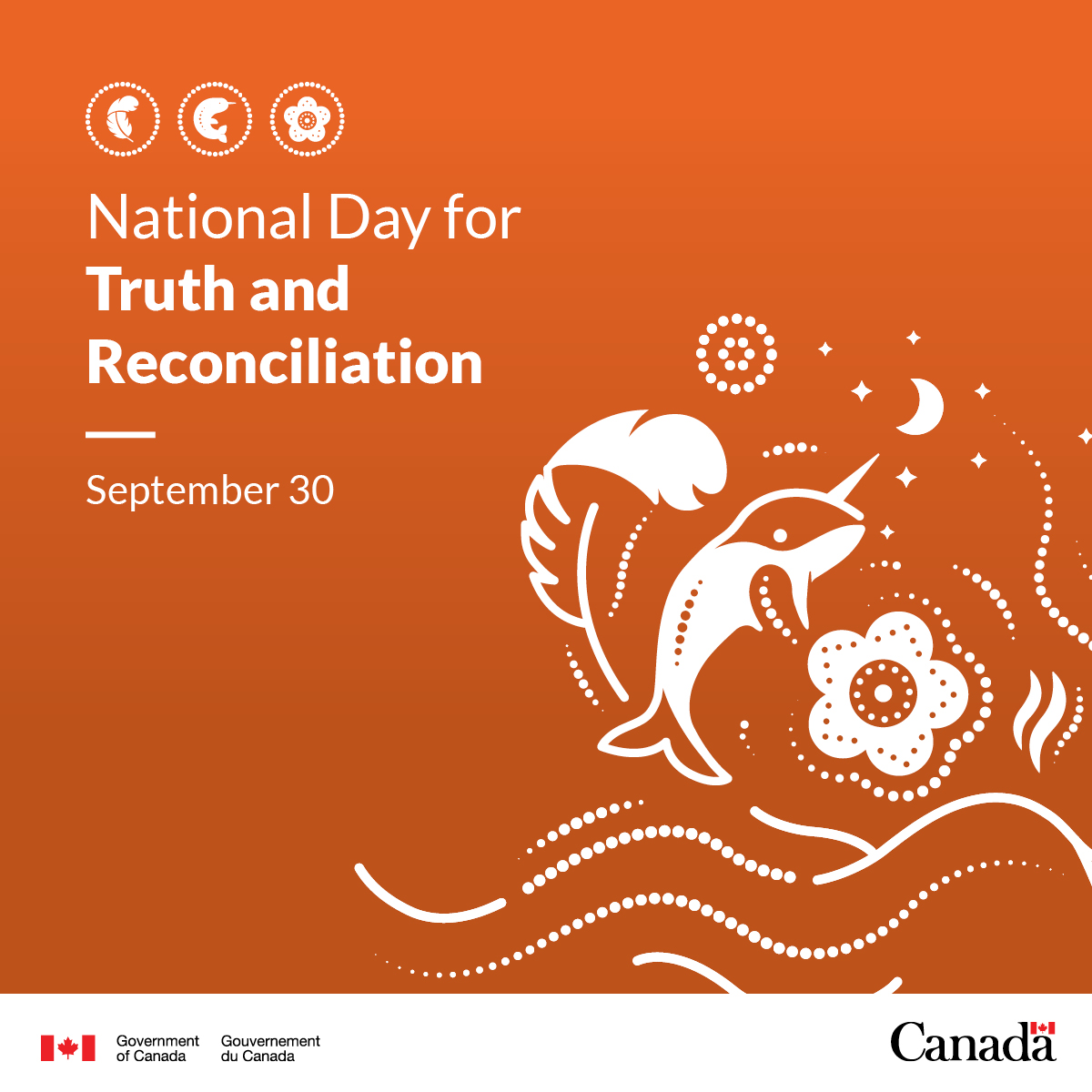
In this campaign design, the feather, narwhal and flower represent First Nations, Inuit and Métis. Stars honour children who never returned home; flowing lines express the ongoing journey of reconciliation.
These meanings describe this particular campaign artwork. Indigenous communities have distinct cultures and traditions.
An artwork about healing, resilience and knowledge passed between generations. Joseph created the 2026 design in partnership with the National Centre for Truth and Reconciliation.
Reconciliation requires ongoing learning, respectful relationships and action. Explore these pathways through Government of Canada resources.
01
Learn together
Explore age-appropriate history and teaching resources.
Learning with children and young people
Calls to Action 62 and 63 address teaching about residential schools, Indigenous history and contemporary contributions. They also call for resources and approaches that build understanding, empathy and mutual respect.
Learn about Indigenous-led language revitalization.
Explore language and cultural continuity
Government resources describe programs and tools supporting the reclamation, revitalization and strengthening of Indigenous languages. Explore teaching and learning materials for First Nations, Inuit and Métis languages.
Read the Calls to Action and learn about Indigenous leadership.
Continue learning beyond September 30
The government’s reconciliation resources describe work on past harms, community wellbeing, Indigenous rights and self-determination. The Calls to Action identify responsibilities for governments, institutions and wider society.
The learning directory also includes Indigenous-authored stories and resources, organised by topic, Indigenous group and format.